Showing posts with label clothes and shoes. Show all posts

Wednesday, May 8, 2013

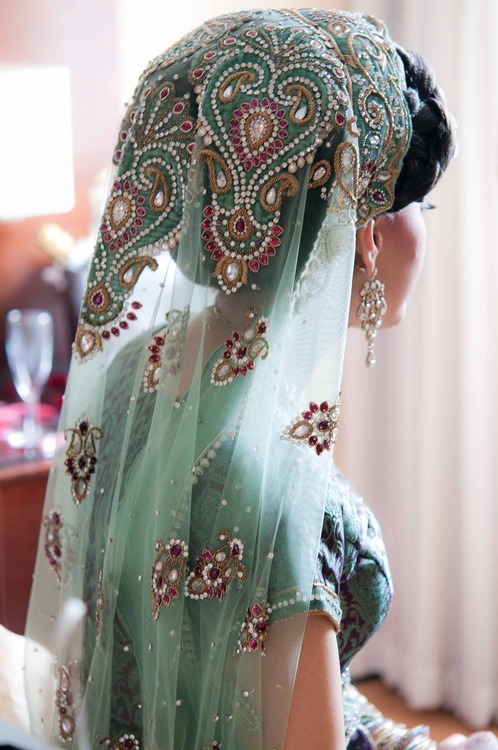
Dupatta

A dupatta (orni/odhni, chunri, chunni, orna, and pacheri)is a long headscarf popular in traditional clothing of many Asian cultures. Also called a chunni, the scarf is commonly seen throughout India, Pakistan, and Bangladesh. The scarf can be draped over the head and shoulders in many different ways, and can be worn with everything from pantsuits to evening gowns.

Some "dupatta suits" include the salwar kameez, the trouser suit, and the kurta. The dupatta is also worn over the Hindu outfit of lehenga or ghaghra- choli. The dupatta has long been a symbol of modesty in South Asiandress. It is traditionally worn across both shoulders. However, the dupatta can also be worn like a cape around the entire torso.

The primary use of a dupatta is to cover the head and/or any inadvertent cleavage and the contour of the bosom. However, the use of the dupatta has undergone a metamorphosis over time. In current fashions, the dupatta is frequently draped over one shoulder and even over just the arms. Another recent trend is the short dupatta, which is more a scarf or a stole, often worn with kurtas and Indo-Western clothing. Essentially, the dupatta is often treated as an accessory in current urban fashion.
When entering a church, gurdwara, mandir, or mosque, it is the habit in the Indian subcontinent for women to cover their head with a dupatta.


Saturday, April 20, 2013

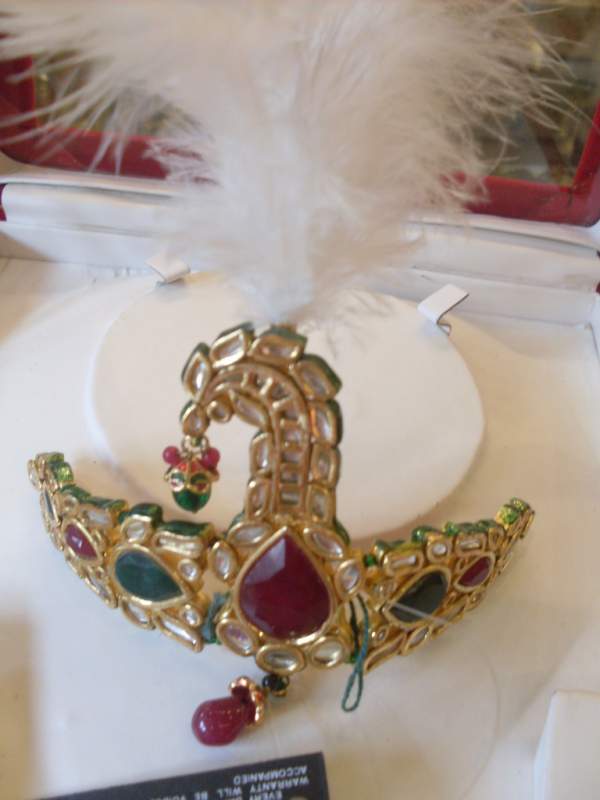
Kalgi-embroidery of beads

 Wearing a Kalgi (a plume) on one’s turban signifies that the person is a royal person, a king and a person with great responsibility and respect;A Kalgi is a beautiful turban pin 

It has a very regal shape and form. Guru Gobind Singh was famous for wearing a Kalgi on his own turban. He so enjoyed these pins, that he was affectionately and reverently called Guru Kalgidar.
On behalf of the Sikhs from the West, we will gift a beautiful gold and be-jeweled Kalgi to Guru Gobind Singh's altar this October during the 300th anniversary celebration.


Choli-sari blouse

A choli or sari blouse is a fitted garment which is designed to be worn under a sari. Choli designs can be quite varied, with a range of styles.

The choli goes by several alternate names, in addition to “sari blouse.” In Pakistan, the choli is known as a lengha, and in the Telugu language widely spoken in India, it is called a ravika. In addition to being worn with saris, cholis can be worn under the salwar kameez like camisoles, and they are also worn in the West over jeans and flowing gypsy skirts; many belly dancers in particular like to wear cholis in performance.


Tuesday, April 16, 2013

Significance of the Groom’s Turban

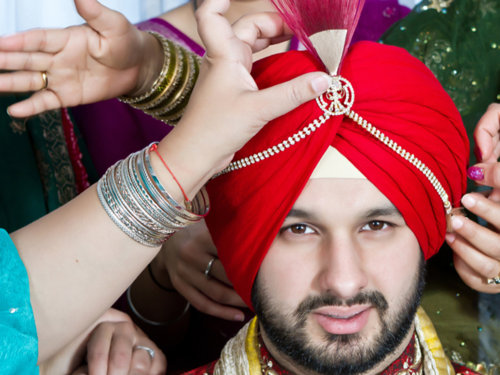
Turbans are known for their beauty and elegance and are an essential part of the groom’s attire at Indian weddings. They are made from a single strip of cloth and are available in various styles. The name varies depending on the style. They are known by various names like pagari, pencha, sela, or safa.
 A pagari is usually 52 feet long and 9 inches wide as compared to a safa which is shorter and broader.
Wedding turbans are usually pink or red in colour.  The fabric used varies from region to region, like silk turbans are famous among Punjabi grooms where as Rajasthani grooms opt for bandhini turbans.
Turbans add a touch of royalty and grace to the outfit. According to olden belief, turbans are a symbol of self respect, prosperity and reflect the dynamic personality of a man. They also enhance the look of the groom on the big day.
In olden times there were not many patterns and styles and also the choice of fabric was very limited. That’s not the case today; nowadays you get turbans matching to the outfit and the various folds in the turban are decorated with gems, beads, zardosi work, raw silk patti borders moti work brocade patti, colored crystals work with pearl strings attached. .
The groom’s turban is usually ornamented with embroidery of beads or Kalgi. Kalgiis a brooch which is studded with stones and has a feather attached. It can be either tied or pinned to the turban. This usually reflects the social status of the family.

Modern turbans are mostly stitched and can be easily worn and taken off as opposed to the traditional ones. Turbans definitely add a royal touch in the groom’s outfit.


Bana - Sikh Spiritual Attire

Bana is a word which means vocation, or calling, and refers to traditional Sikh spiritual attire worn by a man, or woman, whose calling is Sikhism. Full Bana includes:
  • Turban
  • Five articles of faith.
  • Modest attire such as a loose knee length top with long sleeves and a full drawstring trouser.
The very devout usually wear simple solid color clothing and turban. The most popular colors are:
  • Blue - considered a Khalsa color worn by Sikh warriors of old.
  • White - considered the color of one who renounces worldly ways.
  • Saffron - a color representative of showing devoted allegiance.
  • Black - a neutral color for a turban which goes with everything.
Color is a personal choice. What a Sikh wears may reflect the mood of the day, or an occasion such as a commemorative Sikh holiday.
Some Sikhs feel that color choices are reminiscent of Harmandir, the Golden Temple:
  • White represents its marble walls.
  • Saffron is suggestive of its golden domes.
  • Blue is symbolic of the water in the surrounding tank.
  • Black signifies the death of martyrs.


Pronunciation: Baa Naa - B sound has no air - the aa has a long sound like awe - the tongue touches the roof of the mouth when pronoucing N
Examples:
The tradition Sikh spiritual attire and of the turban as bana is reflected in the words of Guru Arjan:
"Mai gur mil ouch dumaalarraa||
I met with the Guru, and I have tied a tall, plumed turban."

Why Are There Different Turban Styles?

Style and color may reflect association with particular group of Sikhs, religious conviction, or fashion. There are many different styles and colors of turban. A longer turban is usually worn in a formal setting such as a business occasion, a wedding, a religious program, or celebration. Popular colors are blue, black, white, and orange. Red is often worn for weddings. A woman’s head scarf, or veil, is traditionally coordinated with whatever she happens to be wearing. It may be solid color or have a variety of contrasting colors. Many have decorative embroidery.
Turbans also come in variety of fabrics from light weight to heavy such as:
  • Mal Mal - A very lightweight fine fabric.
  • Voile - A lightweight weave.
  • Rubia - A medium weight dense weave.


Turban styles include but are not limited to:
  • Domalla - Double length turban of 10 or more yards or meters.
  • Pagri - Double width turban of five to six yards or meters.
  • Dastar - A single turban of four to six yards or meters.
  • Keski - A short turban of two or more yards or meters.
  • Patka - A square of half to one yard or meter, tied over the joora (top knot) and head.
  • Fifty - A half yard or meter worn beneath turban usually in contrasting or decorative color.

Scarf Styles include but are not limited to:
  • Chunni - A sheer lightweight veil of up to two and half yards, or meters, usually one solid color and may or may not have embroidery.
  • Dupatta - A double wide decorative veil of up to two and half yards, or meters, often embroidered on fabric of contrasting colors.
  • Rumal - Any square or triangular cloth worn as a head cover.

Does a Turban Have to be Tied Every Day?

Tying a turban is an event which occurs every morning in the life of a Sikh. Whenever the turban is removed it is to be unwrapped carefully so that it never touches the floor, shaken out, stretched and folded neatly so as to be ready for the next use. The daily routine includes the care and cleanliness of the kes (hair) and beard. In addition to the morning schedule, the hair may be combed and the turban retied after work, before evening prayers, or before bedtime. Many Sikhs wash their hair before morning meditation on a daily basis rinsing it with clear water or shampooing. Prior to tying a turban:
  • The kanga, a wooden comb, is used to detangle the kes and apply oil if desired.
  • The kes is twisted into a joora, a knot, or coil atop the head.
  • The kanga helps to secure the joora and is kept with the hair at all times.
  • The keski, a protective length of cloth, is used by some Sikhs to cover and twist the joora, binding the hair atop the head.

Sikh men or women who wear a keski often tie a second turban or domalla, over the keski. A chunni is a long lightweight scarf worn by many Sikh women to cover their hair which may also be used to adorn a keski or a turban. Many Sikh children wear a square piece of turban called a patka tied over their joora. They may have their kes braided before being bound up to keep it from becoming tangled should their turban come off during play, or while asleep. Because the turban and keski help with the management of long hair, at bedtime an Amritdhari, or initiated Sikh, may choose to:
  • Sleep with a small turban tied over the joora.
  • Drape a small turban or keski over their head to cover the joora.
  • Wear the kes loose and draped with a small turban or keski.
  • Braid the kes and drape the head with a small turban or keski.

Why do people wear turbans?

99% of the people you will see wearing turbans in the U.S, Canada, and UK will be Sikhs, a religious group that originated in India during the 15th century. Sikhs wear turbans because they believe that god gave you hair during your birth, so you should not alter god's gifts in anyway. Therefore they do not cut their hair, although it is very common to see a Sikh wear a turban; yet have a trimmed beard, honestly because it is becoming "fashion", rather than religion. Sikhs' turbans are pointy at the tip of the head; can be circular. Minors usually wear their hair in a bun and type turbans on their heads that enclose their bunned hair. Western Media has blinded Americans in the propaganda, that people with turbans are Arabs or Muslims. When in fact, most, if not all, will be from India belonging to the Sikh or Hindu religion. To see the many variety of Sikh Turbans, and to learn more about the religion please visit the relevant link below.


Being historical warriors, Sikhs wear turbans (and other attire) to identify themselves as such. The wearing of turbans for all Sikhs was mandated by the tenth guru of the Sikhs, but all Sikh gurus wore turbans prior to this. As Sikhs do not cut their hair (out of respect for God), the turban serves to protect the hair and keep it clean- they also wear a turban at all times as they believe God is everywhere, while some other religions advocate the wearing of a head covering only at a time of worship.

Turban

A turban, also known as bulle or dastar in some cultures, is a kind of headwear based on cloth winding; there are many variations. Turbans are usually worn as customary headwear, usually by men, in many communities in India
For Sikhs, originally from Punjab in India, wearing the turban, which they refer to as Dastar, is an important religious observance.
The turban comes in many shapes and sizes and color of turbans vary, with the cloth's length rarely exceeding 5 meters.
For ages as per the religious treditions and culture some indians wear turbans. they are Punabis (Sikh), Kanadiga and Rajastani. Sikhs wear it for religions beliefs and it is a must for them as per Guru Granth sahib.


Sikhism
The turban is closely associated with Sikhism. While not explicitly required for baptized men and women (those who join the Khalsa), they are forbidden to cut their hair and the subsequent use of the turban to manage their long hair has become associated with baptized Sikhs. Unbaptized Sikhs are not required to leave their hair unshorn. The vast majority of people who wear turbans in Western countries are Sikhs. The Sikh pagri is also called dastar, which is a more respectful word in Punjabi for 'turban'.


Indian state of Rajasthan
The Rajput people from the Indian state of Rajasthan also wear distinct turbans. In Hindi, a turban is called a pagri or safa. There are many variations of the turbans in Rajasthan, and it is said that the style of the turban changes with every 15 km you travel. In some areas, especially in Rajasthan the turban's size may indicate the position of the person in society. 'Royalty' in different parts of India have distinctly different styles of turbans, as do the 'peasants', who often just wear a towel wound around the head.


Indian city of Mysore and Kodagu District
The people of Mysore and Kodagu wear turbans called Mysore peta. Distinguished people are honoured by the award of a Mysore peta in a formal ceremony. In Kodagu district people wear it with traditional dress on special occasions such as marriages.


Saturday, April 13, 2013

Sari

Is a strip of unstitched cloth, worn by women, ranging from four to nine yards in length that is draped over the body in various styles which is native to the Indian Subcontinent
Structured of Sari
1.longitudinal borders - "Kinara"
2.the endpiece - "Pallu"
 -is the part of the sari that is draped over the shoulder and left to hang over the back or front of the body.
3.The field - "Jamin"
-is the one which occupies most of the area,it can be simple with one background color or it can have some big plaids or it can have "butis" all over the ground;usually this part of the sari is in contrast with the border or the endpiece.
The sari is usually worn over a petticoat (called lahaṅgā or lehenga in the north; langa, pavada, or pavadai in the south; chaniyo, parkar, ghaghra, or ghagaro in the west; and shaya in eastern India), with a blouse known as a choli or ravika forming the upper garment. The blouse has short sleeves and a low neck and is usually cropped at the midriff, and as such is particularly well-suited for wear in the sultry South Asian summers. Cholis may be backless or of a halter neck style.